In the structure of modern service economies, operational quality is no longer defined solely by effort or availability. It is determined by systems — by repeatable processes, measurable standards, and leadership capable of transforming everyday services into structured, scalable operations.
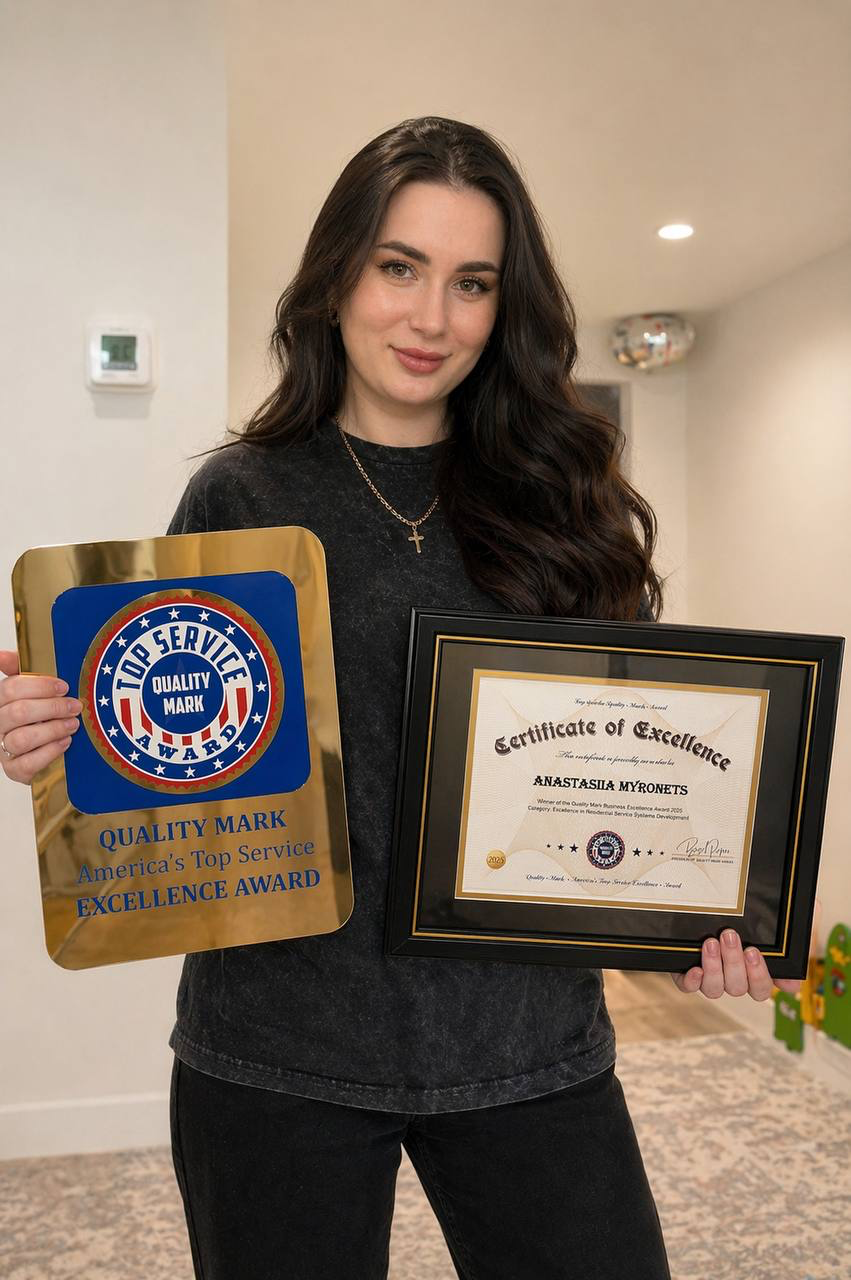
In 2025, the independent Expert Evaluation Commission of the Quality Mark Business Excellence Award formally recognized Anastasiia Myronets as the Winner in the category Excellence in Residential Service Systems Development — a distinction reserved for professionals whose work demonstrates the successful transformation of traditional service industries through operational architecture, quality control systems, and measurable service standards.
This recognition followed a structured multi-stage evaluation process conducted by the Award’s independent expert commission. The evaluation examined documented business practices, operational frameworks, market positioning, service system design, and measurable professional impact within the residential services sector in the United States.
The Commission concluded that the operational model developed by Ms. Myronets represents a structured and scalable contribution to the professionalization of residential service systems.
Transforming an Informal Industry into a Structured Service Model
Residential cleaning in the United States has traditionally operated as a fragmented and largely informal industry. Many providers rely on ad-hoc processes, inconsistent service standards, and limited operational structure.
Anastasiia Myronets approached the industry from a different perspective.
Rather than treating cleaning as a task-based service, she developed a system-oriented operational model designed to deliver consistent quality, structured workflows, and measurable customer satisfaction.
As the Founder and Service Systems Developer of BrighNest Cleaning LLC, a Pennsylvania-based residential services company, Ms. Myronets established an operational framework designed specifically for high-standard residential communities across Bucks County, Princeton, and surrounding areas.
Her approach emphasizes structured service delivery, operational discipline, and repeatable quality standards — principles more commonly associated with institutional service organizations than with independent residential providers.
This strategic shift effectively transforms a traditionally informal trade into a professionalized service system.
Building a Service Infrastructure
Since relocating to the United States in 2023, Ms. Myronets has built and scaled a structured operational model within BrighNest Cleaning LLC that integrates service architecture, client retention systems, and internal operational protocols.
Under her leadership, the company developed a multi-tier service structure, including Standard Cleaning, Deep Cleaning, and Post-Construction Cleaning services — each defined by specific procedural checklists, time allocation standards, and quality control benchmarks.
This tiered structure enables consistent service delivery across different residential environments while maintaining predictable performance outcomes.
Beyond service categories, Ms. Myronets implemented an operational system that integrates:
• structured internal service protocols
• standardized quality control checkpoints
• workflow coordination for multi-person service teams
• detailed finishing procedures designed to elevate perceived service quality
• clearly defined service scope standards aligned with premium residential expectations
This framework allows residential services to function not as isolated tasks, but as coordinated operational processes.
Customer Retention and Service Economics
Another defining element of Ms. Myronets’ system architecture lies in the integration of customer retention strategy directly into operational design.
Within BrighNest Cleaning LLC, she developed a VIP recurring client program that integrates loyalty incentives, scheduled service cycles, and long-term client relationship management.
The company also introduced a referral-based client acquisition model, reducing reliance on traditional advertising while strengthening organic client growth within residential communities.
Complementing this strategy, Ms. Myronets implemented a structured pricing architecture designed to align service costs with premium residential markets.
Rather than competing through low-cost service positioning — a common dynamic within the industry — her model prioritizes value, consistency, and client trust.
This approach reflects a broader shift in residential services toward quality-driven service economies, where operational reliability becomes the primary competitive advantage.
Operational Precision and Service Consistency
Clients and partners consistently note Ms. Myronets’ attention to operational detail and finishing standards.
Her systems emphasize precision-based service execution, including detailed surface finishing techniques, consistency in final presentation, and structured team coordination designed to ensure predictable results across service projects.
In practical terms, this means that service delivery does not depend solely on individual workers but on structured operational protocols designed to maintain consistency regardless of team composition.
This is a key distinction identified by the Expert Commission during its evaluation.
Industries achieve stability when processes replace improvisation.
The systems developed by Ms. Myronets move the residential cleaning industry in precisely that direction.
Systems Thinking in the Residential Services Sector
While many small service companies operate through basic operational management, Ms. Myronets’ professional focus extends into service systems development.
Her work includes the design of workflow optimization models, pricing structures aligned with service complexity, and operational frameworks that improve both efficiency and service reliability.
These elements are not merely managerial tools; they represent systemic architecture that allows service businesses to scale without sacrificing quality.
This distinction was central to the Commission’s evaluation when awarding the 2025 recognition.
The category Excellence in Residential Service Systems Development recognizes professionals who go beyond service delivery and contribute to the structural evolution of their industry.
Ms. Myronets’ work demonstrates exactly that.
Professionalizing an Industry
One of the broader implications of Ms. Myronets’ work lies in the formalization of an industry that historically lacked institutional structure.
By implementing service protocols, repeatable workflows, team coordination frameworks, and structured pricing architecture, she has contributed to elevating professional expectations within the independent residential services market.
Such professionalization benefits not only individual businesses but the broader service economy.
When industries adopt structured operational models, they create:
• higher service reliability
• stronger consumer trust
• improved labor coordination
• more sustainable business growth
These developments are essential in sectors that serve millions of households across the United States.
Recognition by the Expert Commission
The Quality Mark Business Excellence Award is conferred following independent professional evaluation, expert commission review, and documented analysis of a nominee’s professional contribution.
The 2025 decision recognizing Anastasiia Myronets was based on several factors identified by the Commission:
• development of structured service systems within the residential services industry
• implementation of operational standards that improve service consistency
• creation of scalable service frameworks for residential markets
• integration of customer retention architecture within service delivery models
• leadership in transforming a traditionally informal industry into a structured professional service model
The category Excellence in Residential Service Systems Development specifically recognizes professionals who introduce operational architecture and system thinking into service sectors traditionally defined by individual labor rather than organizational design.
Building Service Systems for the Future
The broader impact of Ms. Myronets’ work extends beyond one company.
Her professional focus increasingly includes the development of scalable service frameworks and mentorship initiatives designed to help independent service providers adopt structured operational models.
In doing so, she contributes to a long-term shift in the residential services industry toward greater professionalism, operational discipline, and business sustainability.
Such systems do more than improve efficiency.
They redefine expectations.
Beyond Cleaning — Engineering Service Infrastructure
At first glance, residential cleaning may appear to be a straightforward service.
Yet beneath that surface lies an opportunity for operational innovation.
Anastasiia Myronets recognized that opportunity and approached it not as a task, but as a system.
She did not simply build a cleaning company.
She built a service architecture.
She did not focus only on individual projects.
She designed operational frameworks capable of delivering consistent quality across many.
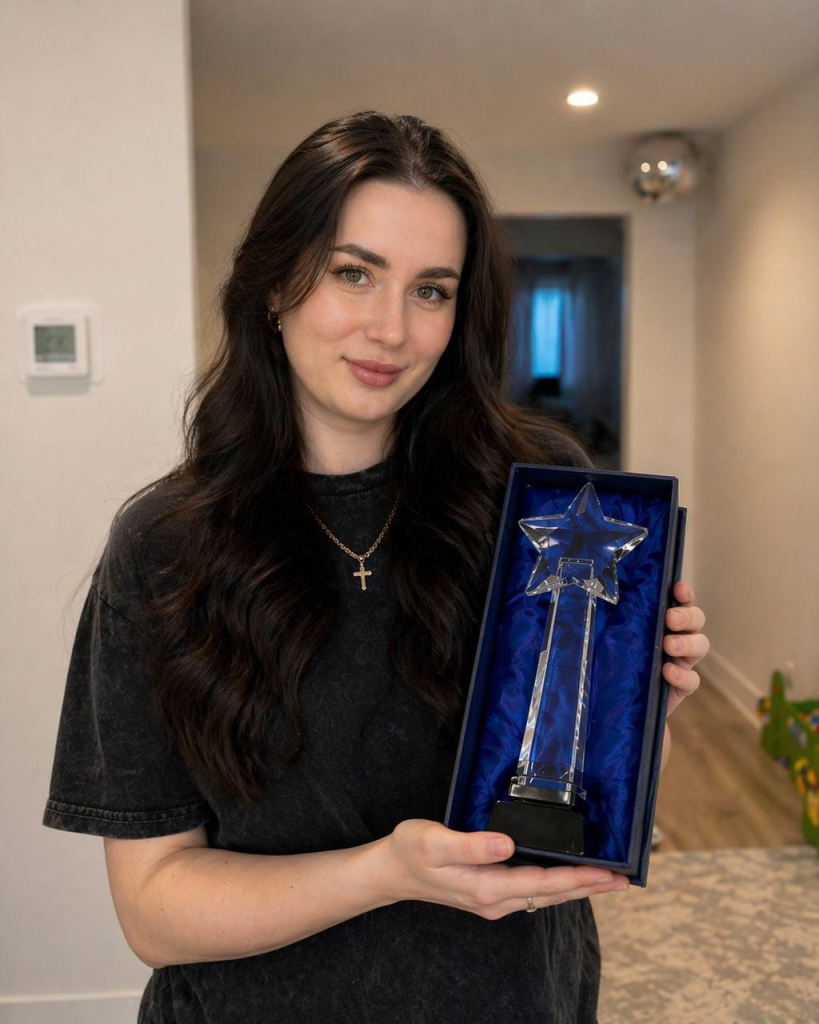
The Quality Mark Business Excellence Award 2025 recognizes not merely the success of a service company, but the development of a structured professional model that elevates an entire segment of the service economy.
And that, ultimately, is the contribution the Award affirms.